
“SHE’S CRAZY! I HEARD SHE SUFFERED FROM ANOREXIA”
GINEBRA ROCHA
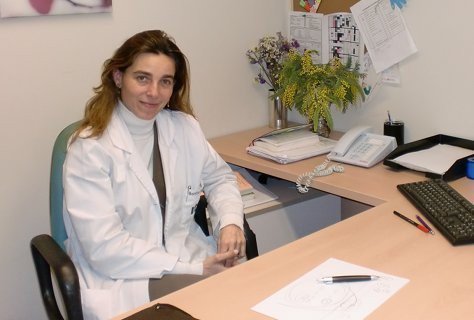
Montse Bascuas, Head of External Consultations at ITA BCN and head of the Health and Lifestyle program explains what surrounds the stigma around eating disorders
Mon 4 Jan 2021 16.00 GMT
The other day while I was having some drinks with a couple friends, I overheard two girls whom I just met, talking about a girl they were upset about. I was less than amused when from all the bad things they could have said about her they started shaming her and calling her crazy and mentally unstable because she had suffered from anorexia a couple years ago.

ITA BCN
From someone who has suffered an eating disorder since I was 16, I felt pity for those girls who thought it was alright to shame someone for having dealt with any sort of eating disorder and how they were so shallow not to understand what eating disorders are really about. It’s not about being crazy, its usually about not knowing how to deal with your own emotions, it’s about under covering trauma, being bullied and low self-esteem.
I’ve even heard people from my own family believe that eating disorders have to do with your social status, sex and ethnicity. I will have to disagree since through my own journey I have met different girls and boys, from different economic and cultural backgrounds who only had one thing in common, pain.
Montse Bascuas, Head of External Consultations at ITA BCN and head of the Health and Lifestyle program, agrees that there is a lot of misunderstandings and misconceptions around eating disorders.
“One would think that eating disorders are about only eating and once you really start to go in depth, you discover that what really is behind an ED is not only an issue about weight, but suffering, pain, anxiety and a state of mind that doesn’t let those people be able to enjoy their lives as everyone else”.
The bodies that present anorexia would be the current version of the stigmas well known in the Christian religion.
“Given the religious connotation that stigmas usually have, I believe everything started with some cases of the so-called holy anorexia, such as the famous Saint Catherine of Siena.”
St. Catherine of Siena suffered from an extreme form of fasting, a condition that was classified as anorexia mirabilis.
“Though it might seem that St. Catherine does not have much to do with the people who today suffer from this disorder, the obvious thing is that they avoid eating to reach extraordinary levels of thinness. The less obvious but psychologically more relevant thing is, they feel uncomfortable and scared of life and feel a need to escape; some of painful relationships, others of an excessive control of their parents and others to face the sexual condition of their body.”
Another stigma that revolves around ED’s which is even more relevant for its consequences, would be given by the social misunderstanding towards people with mental disorders and especially people that suffer from anorexia.
“The consequences of social misconceptions together with the seriousness of the disorder itself, results in a decrease of the opportunities to enjoy an active life and in terms of quality of life and social support. This usually also affects relationships ( interpersonal and emotional ), equal access to employment, health care, autonomy and economic-social independence.”
Eating disorders settle in our society with the implementation and dissemination of new canons of feminine beauty in western countries, that is why they are almost non-existent in third world countries.
“Different epidemiological studies show this: It is a phenomenon that origins in rich countries, that have an abundance of food. In Europe, these disorders begin to grow in the sixties. It started in rich countries, spread through the higher classes and ten years later reached most of the population.”
Slimer bodies freed women from corsets, and from the sedentary life of the wealthier classes, but at the same time it promoted the need for a new way of leisure, sport, which could only be accessed by the higher status.
“The modern dynamic woman is a woman with free time. Many of the methods to stay slim and healthy now a days are fully commercialized. Except for official campaigns to prevent the disease, there is a genuine market that offers the most diverse ways to lose weight by consuming. In these scenarios what worries us are the results. The help we offer is aimed at building thoughts based on objectivity. Part of the rehabilitation work consists of teaching the nutritional value of food.”
In Spain 400,000 people suffer from eating disorders and 300,000 of them are between 12 and 21 years old.
Eating disorders are not just behaviors but emotions, they are not just a matter of size, image, food and neither is a trend. It does not only affect teenagers, it is not a superficial disease and it does not only affect women. It has nothing to do with social stereotypes and they are certainly not incurable.
“Our patients usually feel emotions in a very intense way. They are people who are not capable of handling well their emotions and in that sense we help them work and face those difficulties that may appear on their lives in a more normalized and less intense way.”